Nalvi Duro← All of my work

Computational biology that runs, and shows its work.

Work I do with my own hands. Two things I build. A pipeline from raw sequencing data to results a downstream team can trust: versioned, gated by QC, with every change it makes written down. And an animation of your protein or mechanism, built from the deposited coordinates, with every motion labeled by how it was obtained: measured, modeled or simulated.

Tampa Bay, Florida · Remote across the US · Contract or fractional

What I work on

  • Assembly processing and QC

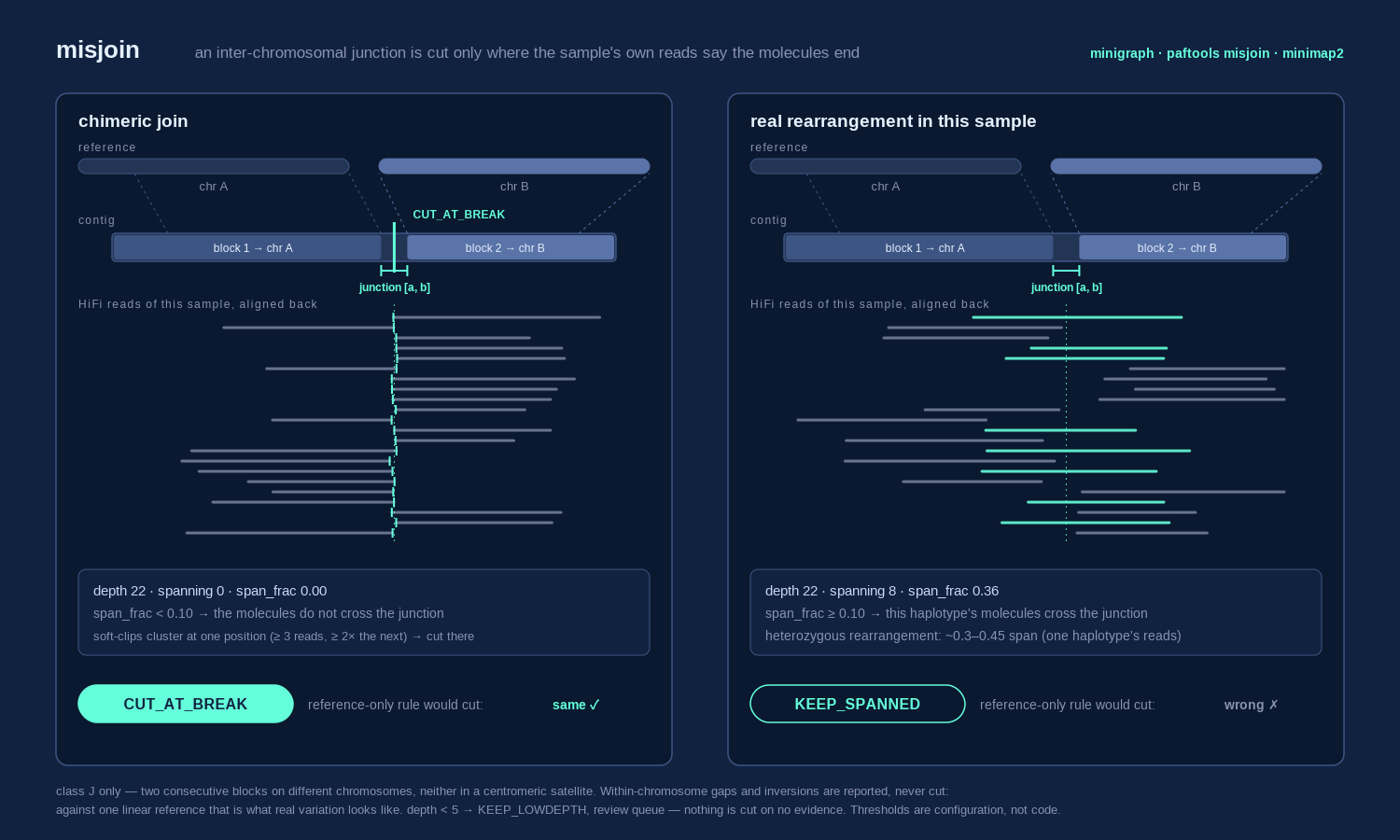
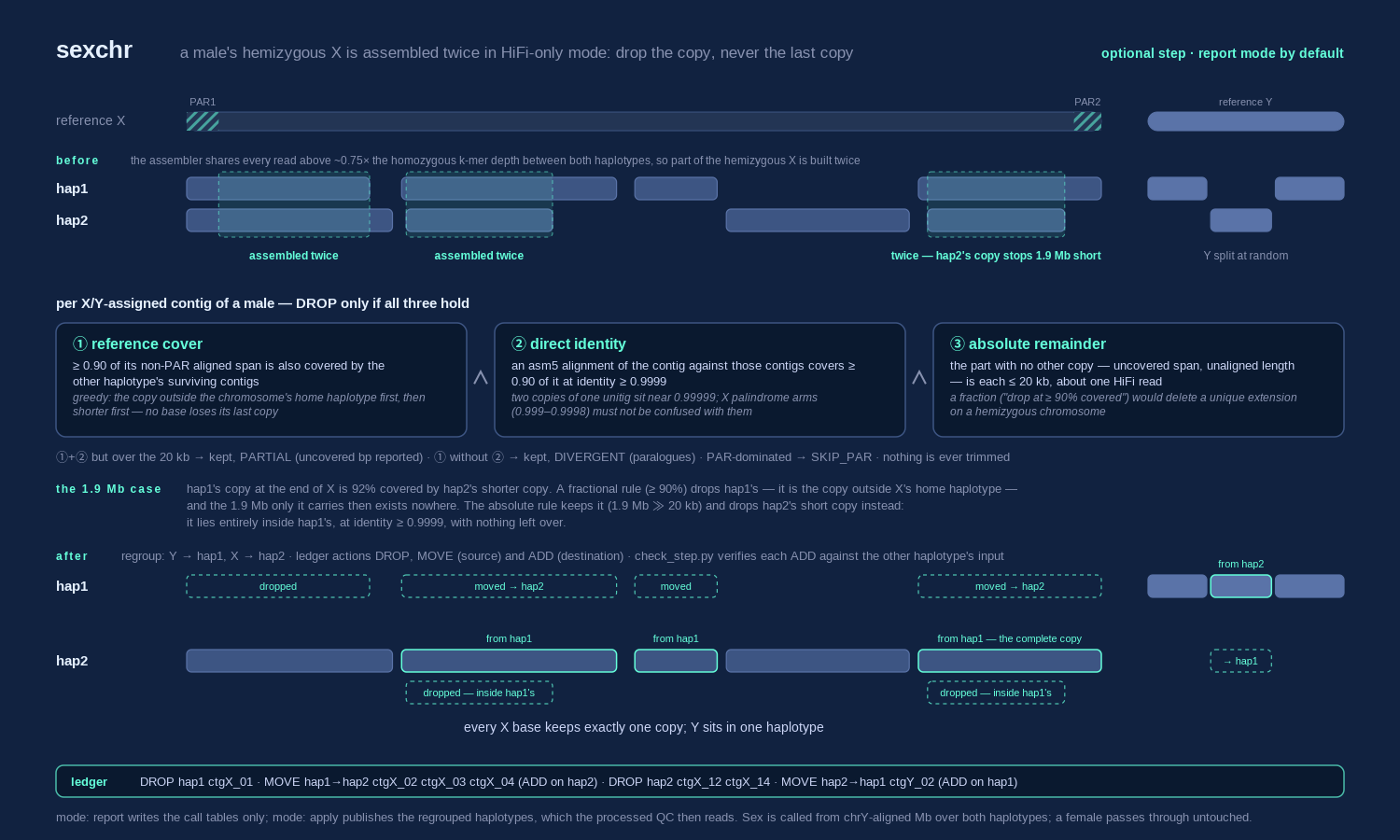
    Genome assemblies cleaned and checked before anyone builds on them: contaminants, misjoins and duplicated spans found, fixed and ledgered.

  • Protein animation

    Accurate 3D clips and interactive models of proteins and mechanisms, rendered from the deposited coordinates.

Who I help

  • A lab whose analysis lives in scripts only one person can run.
  • A biotech moving from notebooks to a pipeline it can hand to a partner or a CRO.
  • A core facility or consortium that needs the same QC applied the same way to every sample.
  • A lab with data and a deadline, and no one free to analyse it.
  • A PI with a talk or a grant that needs the mechanism shown, not described.
  • A journal figure that would be clearer as ten seconds of motion.
  • A biotech site or a course that needs its molecules drawn right.

Services

  • Pipeline build

    A workflow from first commit to release: scope, environments, QC gates, tests, CI and a runbook.

    You getA Snakemake workflow with a setup script, a ledger of what each step changed, and checks that re-derive the output.

  • Pipeline rescue

    An existing pipeline that no one dares touch: I read it, pin it, test it, and make it reproducible before changing anything.

    You getThe same results, reproduced on a clean machine, with the differences explained.

  • QC and reporting

    The checks that let a downstream team trust the output — contamination, misjoins, duplication, completeness — and a report a reviewer can read.

    You getA QC report per sample and a pass/fail rule you agreed to before the run.

  • Analysis

    From a question to an answer: data audit, method chosen and justified, results with their uncertainty, figures that show what the numbers do.

    You getA written report, the figures, and a repository that reproduces them.

  • Second opinion

    A fixed-length review of an analysis someone else did — the data, the method, the claims.

    You getA short memo: what holds, what does not, and what it would take to be sure.

  • A clip

    One structure or one mechanism, 10–30 seconds, from PDB or AlphaFold coordinates, in your palette, with a still for the slide.

    You getMP4 (1080p or 4K), a poster frame, and the Blender file.

  • A series

    A set of clips that share a look — a pathway, a family, a lecture.

    You getThe clips, a style sheet so the next one matches, and the project files.

  • Interactive 3D

    The structure in the browser: rotate, zoom, step through states — built on the BIOS pipeline.

    You getA web embed (glTF + three.js) you can put on a page, and the source.
How I work

  1. Intake

    Should we do this, and on what basis?

    You get: A thirty-minute call, then a written intake. Paid, favor or equity is decided and written down.

  2. Discovery

    What exactly is being launched, for whom, and what does “launched” mean?

    You get: A charter: goal, what is in and out of scope, success metrics, stakeholders, constraints and an audit of what you already have.

  3. Plan

    How do we get there and by when?

    You get: Milestones, a work breakdown, owners and dates, a risk log, and an agreed cadence. A proposal and engagement letter if the work is paid.

    G1 — plan approved. You approve the plan, in writing. Nothing is built before that.

  4. Build

    Are we making the thing, on track, with scope under control?

    You get: Weekly status updates, meeting notes, a written change request for any scope change, and the deliverables themselves.

    G2 — launch readiness. The checklist is green, or red and you accept the red in writing.

  5. Launch

    Does it go live cleanly, and does it work in the first two weeks?

    You get: A launch checklist run, a go/no-go record, a one-page launch-day runbook and a review at fourteen days.

  6. Close

    Can you run it without me, and what did we learn?

    You get: Handoff, training, transfer of every account to you, and a retrospective.

    G3 — closed. You hold everything and can run it yourself. Then we are done.

It’s how PakezDrite.com was built: every change traces to a numbered requirement, and every decision is on record with who made it and why. How ticketing and payments are built.

Ways to work together

  • Diagnostic

    About 2 weeks

    Fixed scope, fixed price. A look at a pipeline or analysis that has stalled, ending in a written plan you keep.

    On request

  • Pipeline or analysis project

    Fixed scope

    A defined deliverable in milestones, each ending at a gate and a written handback.

    On request

  • Clip, series or interactive

    About 2 weeks per clip; interactive scoped per structure

    One structure or mechanism with two rounds of revisions, a set of clips in one look, or a browser embed.

    On request

Selected work

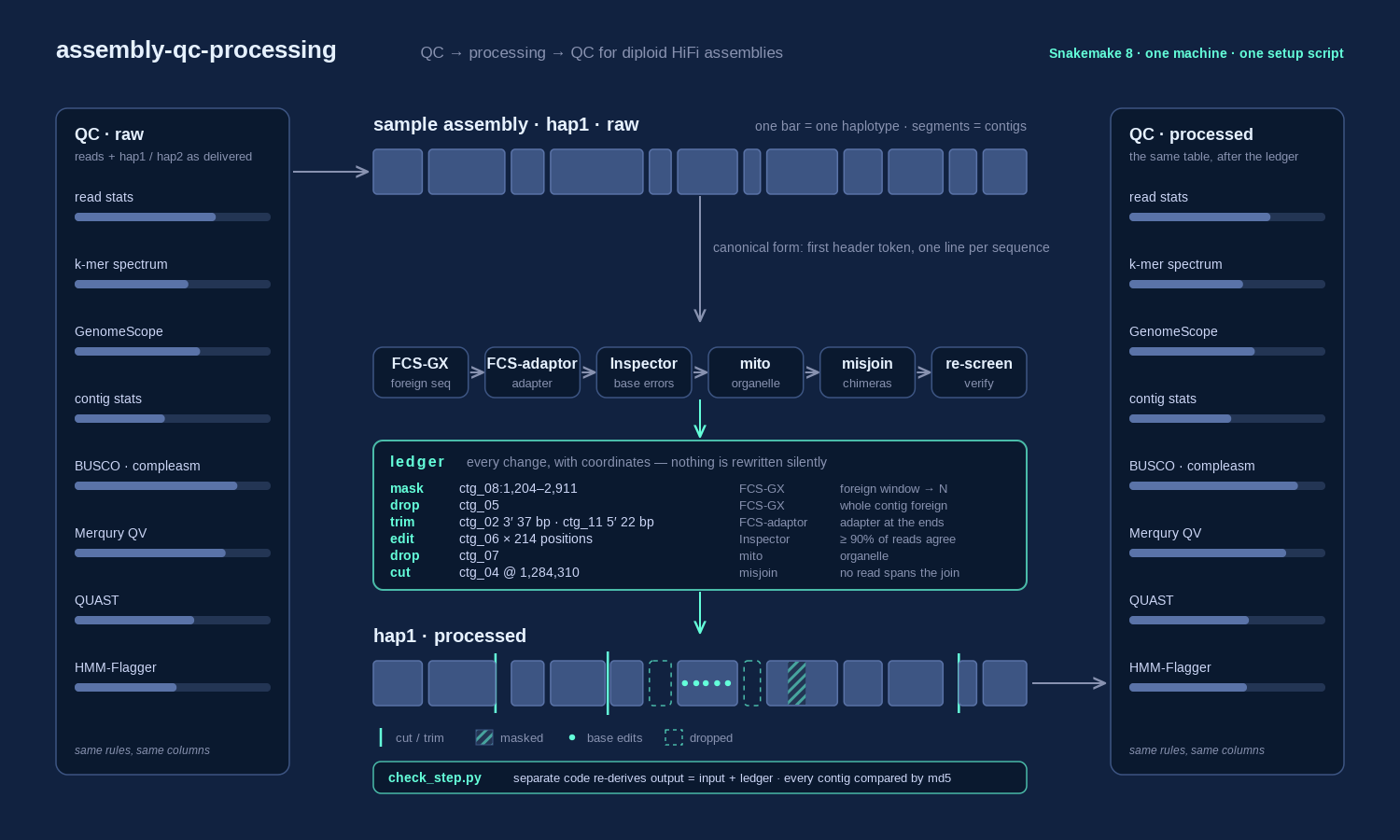
A haplotype drawn as a bar of contigs passing through six processing steps, with every change written to a ledger and re-checked.

assembly-qc-processing — a pipeline people can trust

The problem
Diploid HiFi assemblies headed into a pangenome graph need cleaning — contaminants, misjoins, duplicated X/Y spans — and everyone downstream has to trust exactly what was changed.
My role
Designed and built the workflow.
What shipped
One Snakemake 8 workflow, one machine, one setup script. Every change a step makes is written to a ledger with coordinates, and an independent check re-derives the output from the input and the ledger before anything downstream runs.
What changed
To fill: who runs it now, and what it replaced or saved
  • Snakemake 8
  • HiFi
  • hifiasm
  • FCS-GX
  • Inspector
  • Merqury
  • Flagger
  • MIT
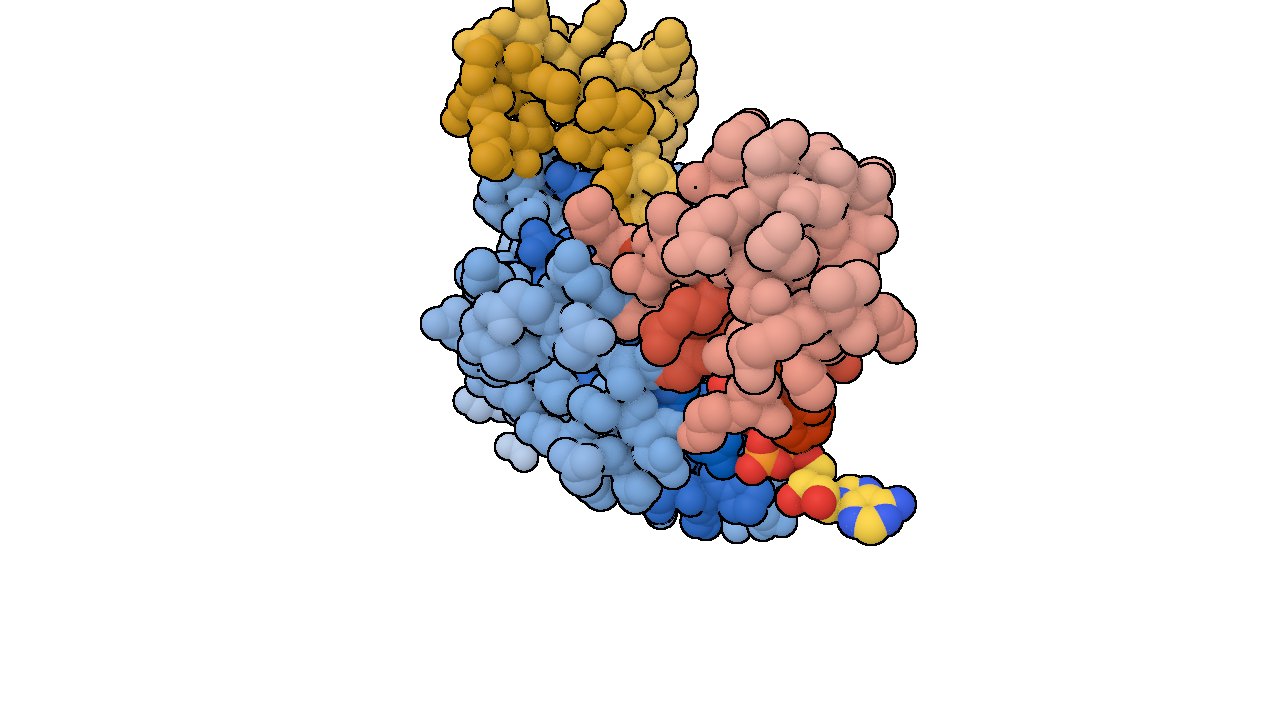
Adenylate kinase drawn as filled atoms in blue, salmon and gold, the two ADP products leaving the active site.

The heme pocket and adenylate kinase — two clips from coordinates

The problem
Science-education 3D tends to look right and be wrong.
My role
Designed the pipeline and rendered both clips.
What shipped
Oxymyoglobin’s heme pocket (PDB 1A6M) rendered in Blender from the deposited coordinates, playing behind the page header; adenylate kinase releasing two ADP, from steered molecular dynamics, 13 s.
What changed
To fill: where the clips are used, or a client you can name
  • Blender
  • PDB
  • molecular dynamics
  • OpenFold3
  • three.js
  • glTF
The products leave — adenylate kinase opens and releases two ADP (steered molecular dynamics; 13 s)

Tools and background

Pipelines and bioinformatics

  • Snakemake 8
  • HiFi long reads
  • hifiasm
  • Merqury
  • FCS-GX
  • Inspector
  • Flagger

Analysis and data

  • Python
  • R
  • statistics
  • normalization and imputation
  • sequencing QC
  • multi-omics
  • metabolomics

Modeling and 3D

  • molecular dynamics
  • OpenFold3
  • Blender (Cycles)
  • three.js
  • glTF
  • Unity
  • ffmpeg

Delivery

  • Git and GitHub
  • CI
  • conda / containers
  • HPC schedulers
  • runbooks

Background

Ph.D. in cell and molecular biology from the University of South Florida. A decade across computational biophysics, bioinformatics and large-scale genomic analysis, with peer-reviewed work in Communications Biology, Structure, Proteins, Langmuir and the Journal of Mass Spectrometry.

Questions

Do you work remotely?

Yes. I’m in Tampa Bay, Florida, on Eastern Time, and work remotely with teams across the US. On-site in Tampa Bay is easy.

How do you contract?

To fill: 1099, corp-to-corp, through an LLC — whichever applies

Will you sign an NDA?

Yes — before the first detailed conversation, if you want.

What about patient or controlled-access data?

It stays where your agreements say it lives. I work inside your environment and its access rules, and I don’t move restricted data off it.

How soon can you start?

To fill: your current availability

Which workflow managers?

Snakemake first. Nextflow if that is what your team runs; say so on the call.

Can you work inside our HPC or cloud?

Yes. I work in your environment under your access rules; nothing leaves it.

Do I get the code?

Yes. Every pipeline and every analysis ships with the repository that reproduces it.

What if the data doesn’t support an answer?

Then that is the answer, with what would be needed to get one. You are not paying for a conclusion.

Where does the structure come from?

The PDB, AlphaFold or your own coordinates. The source is named in the clip’s credit line.

Can you animate motion nobody has measured?

Yes, and it is labeled as modeled or simulated on screen. Chemistry is drawn, never claimed.

What do I get to keep?

Everything: the renders, the poster frames and the project files.

Have data that needs a pipeline, or a structure that needs to move?

Tell me what goes in, what should come out, and by when. The first call is free.